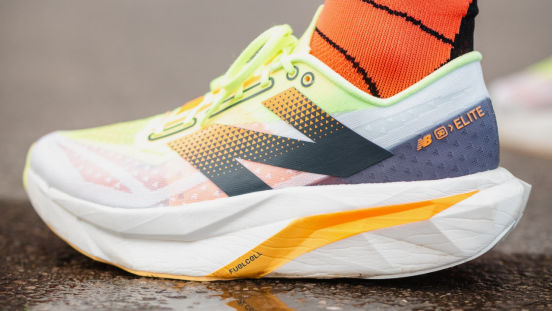
In the running shoe market where racing shoes and training shoes are constantly evolving, New Balance’s SC Elite v4 and Rebel v4 have quickly gained the attention of runners with the help of FuelCell midsole technology. They seem to be similar in style, but in fact they are positioned very differently. After two months of actual running experience, this article will take you to clarify the key differences between the two from the upper design, midsole structure to usage scenarios, and help you find a more suitable pair.
Upper and appearance: similar but different
At first glance, the SC Elite v4 and Rebel v4 look almost identical, especially in the same color scheme, and can almost be described as “brothers”. However, the details reveal their respective positioning: the tongue of the SC Elite v4 is simpler and thinner, with flat laces and less heel padding, all of which serve the needs of “lightweight” and racing. The Rebel v4, on the other hand, has more padding on the tongue and heel, wider laces, and is more suitable for a stable fit in daily training.
According to actual test suggestions, SC Elite v4 is more suitable to be paired with slightly thicker running socks to avoid shoelaces pressing on the instep, while Rebel v4 is significantly more comfortable and adaptable, can adapt to more foot shapes, and is suitable for more frequent daily wear.
Midsole structure: technology defines role
The midsole is the most essential difference between the two shoes. The SC Elite v4 uses a full-length carbon plate and pure PEBA material FuelCell, which feels springy and powerful, and has a clear sense of propulsion, especially suitable for high-speed rhythm running or race day use. The Rebel v4 uses a FuelCell midsole made of PEBA and EVA mixed foam, without a carbon plate, which feels softer and more natural, and is more flexible when running.
In terms of outsoles, both use the same rubber formula and have good grip performance, but the Rebel v4 outsole is thicker and more wear-resistant, making it more suitable for high-frequency use in training scenarios.
Use scenario: complementary rather than opposing
The SC Elite v4 is clearly designed for racing, and the official even has the words “FUELED FOR RACEDAY” marked on the tongue. It performs best on race days or high-intensity training with a pace of less than 4:30/km, and is especially suitable for runners pursuing PBs. The Rebel v4 is positioned more for daily use and versatility, and the tongue is marked with “FUELED FOR ANY RUN”, whether it is recovery running, LSD long-distance training, or interval rhythm training, it can easily handle it.
These two pairs of shoes form a natural complement in terms of usage scenarios: one pair is for sprinting, and the other pair is for training.
Buying advice: Choose according to your needs, or combine the two
If you have a clear competition goal, hope to refresh your performance in the full marathon or half marathon, and are willing to invest in high-performance racing shoes, SC Elite v4 will be a very suitable choice. On the contrary, if you are looking for a pair of shoes that can cope with most training scenarios, feel naturally comfortable, and have high durability, then Rebel v4 is undoubtedly more suitable.
Of course, the ideal situation is to use both shoes together – Rebel v4 for training and SC Elite v4 for competition, so that training and competition can each perform at their best. This is also the original intention of New Balance in designing these two shoes.
Summary: Different routes, equally excellent
SC Elite v4 is a mild and explosive “racing boot” suitable for runners who demand results and like the feeling of propulsion; Rebel v4 is a reliable and durable “all-rounder” that can accompany every training session. Although both have the same FuelCell gene, they go their separate ways in terms of functionality and positioning. Which pair to choose depends on your current training goals and running habits, or you can just buy both and let them accompany you to run further.
